
Stax
Have the conversation first
Stax is the one archetype on this site that comes with a social rule. The deck wins by making everyone else play less Magic: fewer spells, less mana, fewer untaps, fewer attacks. That is a legitimate way to win and a miserable way to lose if nobody expected it. So before anything else, the Rule Zero conversation, and here is a version that works.
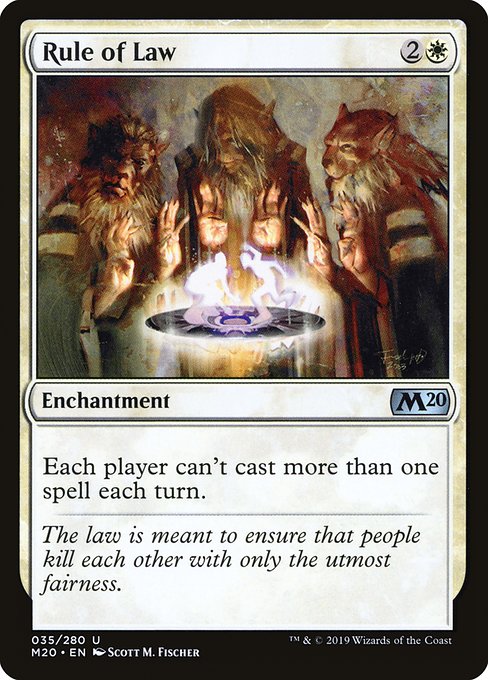
"This is a stax deck. It will slow the game down for everyone, me included, and it wins by grinding rather than by a big turn. Pieces like Winter Orb and Rule of Law will be out early. If that is not the game anyone wants tonight, I have another deck."
Said plainly, most tables say yes, and the ones that do not have saved everybody two hours. The Commander bracket system treats mass land denial as a bracket-four signal for the same reason; this page's brackets guide covers where each piece lands.
As of November 8, 2026, ArcaneMetriX classifies 397 Commander-legal cards as Stax payoffs. The lists on this page are generated from that classification and refreshed with every deploy.
What Stax is
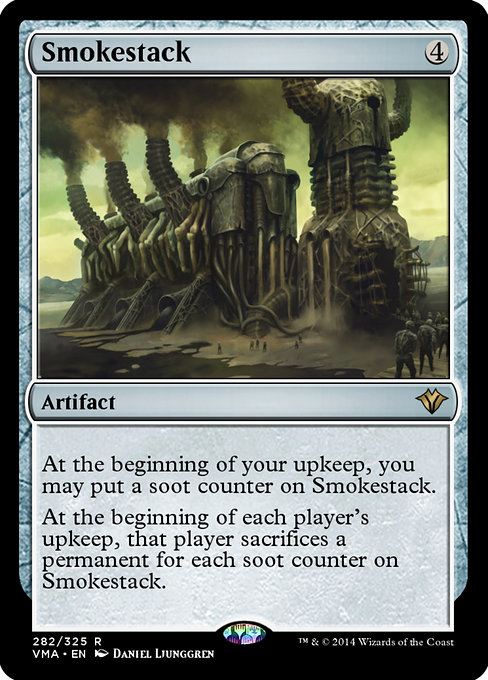
The name is a mangled plural of Smokestack, a 1998 artifact that makes each player sacrifice a permanent every turn, and the archetype is any deck built around effects like it: taxes that make spells cost more, locks that stop permanents untapping, limits on how many spells a player may cast, and symmetrical punishment. "Prison" is the older word for the same idea.
What separates a stax deck from a pile of annoying cards is one principle, and it has a name: breaking parity. Every stax piece is symmetrical on its face. Winter Orb stops everyone's lands untapping. Rule of Law limits everyone to one spell a turn. The stax deck is the deck built so that those effects hurt it less than everyone else: it runs mana rocks under Winter Orb, casts one spell a turn under Rule of Law, plays basics under Blood Moon. The pieces are not the strategy. The asymmetry is.


Who does this hurt?
Pick a stax piece, then describe your deck honestly. If the piece hurts you as much as the table, a stax player would not run it until that changed.
The pieces
Taxes, locks and limits, as the engine reads them. There is no enablers list for this archetype; the enablers are the mana rocks, basics and creature-based mana that let the stax player live under its own pieces, and they are the same cards in every deck.


Commanders that lead it
A stax commander is itself a tax or a lock, so the first piece is always in the command zone. Ordered by overall popularity across every Commander deck.


Locks and finishes
Stax rarely combos in the usual sense; it locks. Two pieces that together stop an opponent doing anything are the archetype's version of an infinite, and these are the most popular pairs that include a stax piece.
-
Karn, the Great Creator + Mycosynth Lattice Activated abilities of permanents your opponents control can't be activated; Activated abilities can't be activated; Lock Commander SpellbookKarn, the Great Creator
 Mycosynth Lattice

-
Hullbreaker Horror + Intruder Alarm Infinite mana creatures you control can produce; Infinite storm count; Infinite untap of creatures Commander SpellbookHullbreaker Horror
 Intruder Alarm

-
Chulane, Teller of Tales + Intruder Alarm Infinite card draw; Infinite draw triggers; Near-infinite creature ETB Commander SpellbookChulane, Teller of Tales
 Intruder Alarm
-
Aetherflux Reservoir + Karn, the Great Creator Infinite damage; Infinite lifegain triggers Commander SpellbookAetherflux Reservoir
 Karn, the Great Creator
-
Narset, Parter of Veils + Teferi's Puzzle Box Each opponent shuffles their hand into their library during their draw step; Opponents can't draw cards during their turn; Lock Commander SpellbookNarset, Parter of Veils
 Teferi's Puzzle Box

-
Drannith Magistrate + Knowledge Pool Opponents can't cast spells; Lock Commander SpellbookDrannith Magistrate
 Knowledge Pool

Combo data from Commander Spellbook, the community combo database, used with credit; each entry links to its page there. ArcaneMetriX picks the combos that include one of the archetype's most-played payoffs.
Building it
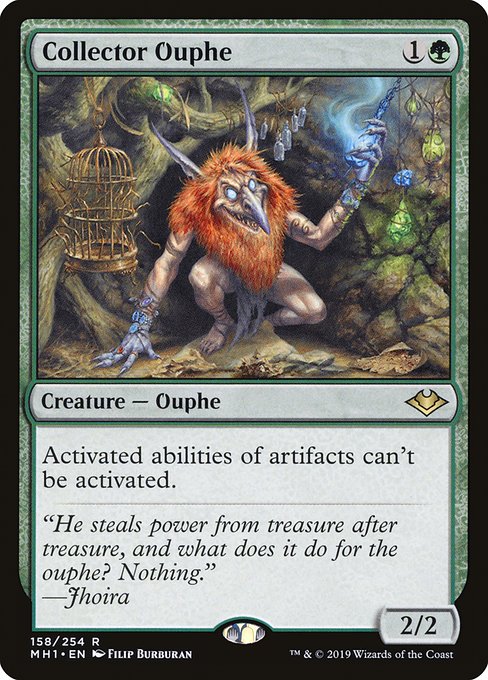
Start from the asymmetry, not the pieces. Decide what your deck does that the table does not, then choose the pieces that punish everything else: a creature-based mana deck runs Winter Orb and Collector Ouphe; a one-big-spell-a-turn deck runs Rule of Law and Drannith Magistrate; an artifact deck runs Stasis and untaps its own things. Then add a clock. Stax decks lose by locking the table and never winning, so every list wants a few threats that work under its own locks, and card draw to find them, because the game will be long.

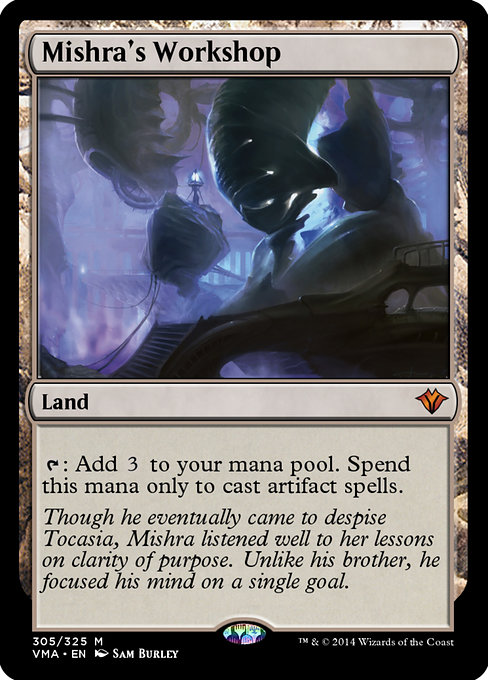
In Vintage and Legacy, stax is a Mishra's Workshop deck that plays its pieces on turn one; in Commander it is slower, more creature-based, and, in the right pod, one of the most interesting decks at the table. Just say so first.
Know your bracket
ArcaneMetriX estimates a deck's Commander bracket from its speed, interaction and the signals the bracket system names, mass land denial among them, so a stax list knows which conversation it needs before the shuffle.
Questions players ask about Stax
What is a stax deck?
A deck built around effects that deny resources to every player: taxes that make spells cost more, locks that stop permanents untapping, limits on spells cast and forced sacrifices. It is built so those symmetrical effects hurt its opponents more than itself, which is called breaking parity.
Why is it called stax?
After Smokestack, a 1998 artifact that makes each player sacrifice a permanent each turn. The early decks built around it were called Smokestack decks, shortened to Stax, and the name stuck to the whole strategy.
What does breaking parity mean?
Building your deck so a symmetrical effect is one-sided in practice. Winter Orb stops everyone's lands untapping, but a deck whose mana comes from artifacts and creatures barely notices it. Every stax piece is chosen for the parity the deck can break.
Is stax allowed in Commander?
Yes. No stax piece is banned on its own, but mass land denial is one of the signals that place a deck in Commander bracket 4, and most tables expect a Rule Zero conversation before a stax deck is played.
How do I beat a stax deck?
Remove the piece that is one-sided for the stax player, not the first piece you see, and attack their clock: stax decks lose by failing to win. Artifact and enchantment removal that is cheap and instant-speed is the answer, and so is simply not overextending into a Smokestack.